Rear underride guards are required
Most trailers must have a rear guard under 49 CFR § 393.86. The guard must meet strength and dimension standards. We inspect whether it was compliant, corroded, or damaged before the crash.
Severe semi-truck crash types
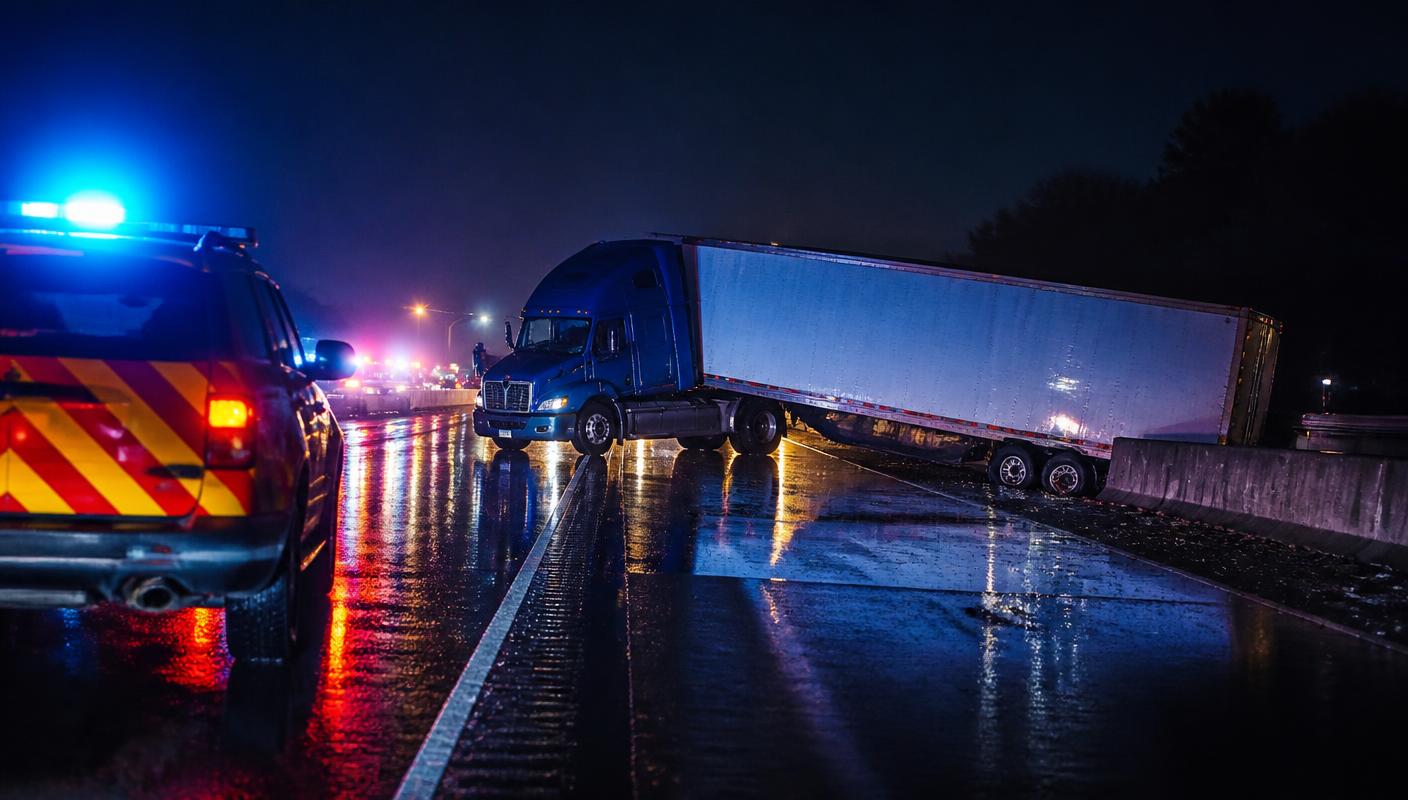
Underride and jackknife crashes are among the most devastating collisions on East Texas highways. The injuries are severe, and the evidence is often in the truck's own maintenance and black-box records.
Where these crashes happen
Underride crashes
Underride crashes are devastating because the trailer's flat bed is at windshield height. Federal rules require rear guards, but they are not always strong enough, and side guards are not required at all.
Most trailers must have a rear guard under 49 CFR § 393.86. The guard must meet strength and dimension standards. We inspect whether it was compliant, corroded, or damaged before the crash.
Despite safety recommendations, federal rules do not mandate side guards. That does not excuse a carrier from driving safely or from choosing trailers that are unreasonably dangerous for the roads they use.
When a guard is weak or missing, a passenger car can slide beneath the trailer. The impact strikes the windshield and occupant compartment at head height.
Jackknife crashes
A jackknife is almost always a loss-of-control event caused by brake imbalance, light trailer loading, or speed too fast for the road conditions.
If the trailer brakes lock before the tractor brakes, the trailer swings out. Brake imbalance and deferred maintenance are common findings.
A lightly loaded trailer has less traction. Hard braking on a wet or uneven surface can cause the trailer to break traction and fold.
Entry speed into a curve, ramp, or emergency stop is the single biggest contributor. The black box usually proves it.
Evidence
These crashes are won on physical evidence and electronic data. This is the list that goes into the preservation letter.

Free case review
Tractors are repaired and trailers are sold. A preservation letter is what keeps the evidence you need from being destroyed.
No fee unless we win · Consultations are free and confidential
Straight answers
An underride happens when a smaller vehicle slides beneath the trailer or side of a semi-truck. Because the trailer bed is higher than the car's hood, the car's passenger compartment takes the impact, often at windshield level. Rear underride guards are designed to stop this, but they do not always work.
A jackknife occurs when the trailer swings out and folds toward the tractor, usually because the trailer brakes locked or the driver braked too hard for conditions. Contributing factors include brakes out of adjustment, empty or light trailers, wet roads, and excessive speed.
Rear underride guards are required on most trailers under 49 CFR § 393.86. Side underride guards are not federally required in the United States, although they are recommended by safety advocates and are required in some other countries. A missing or defective rear guard can be strong evidence of negligence.
The driver, the motor carrier, the trailer owner, and sometimes a maintenance contractor or parts manufacturer can all be liable. In underride cases, the guard's designer or installer may also be a defendant. The specific evidence, photographs, guard condition, and ECM data, usually decides who is responsible.
If you were hurt in an underride or jackknife crash on I-20, Loop 323 or US 69, speak with a Tyler truck accident lawyer before the tractor is repaired and the black-box data is overwritten. The first call is free and there is no fee unless we win.